


Since her neighborhood near North 60th Street and West Silver Spring Drive flooded in August, Angel Flemister is still not back in her home.
While she continues to wait for repairs to be complete, she’s lived out of hotels, short-term rentals and shelters that have required her to take a breathalyzer and pee in a cup for drug tests.
“That’s just very degrading,” Flemister said.
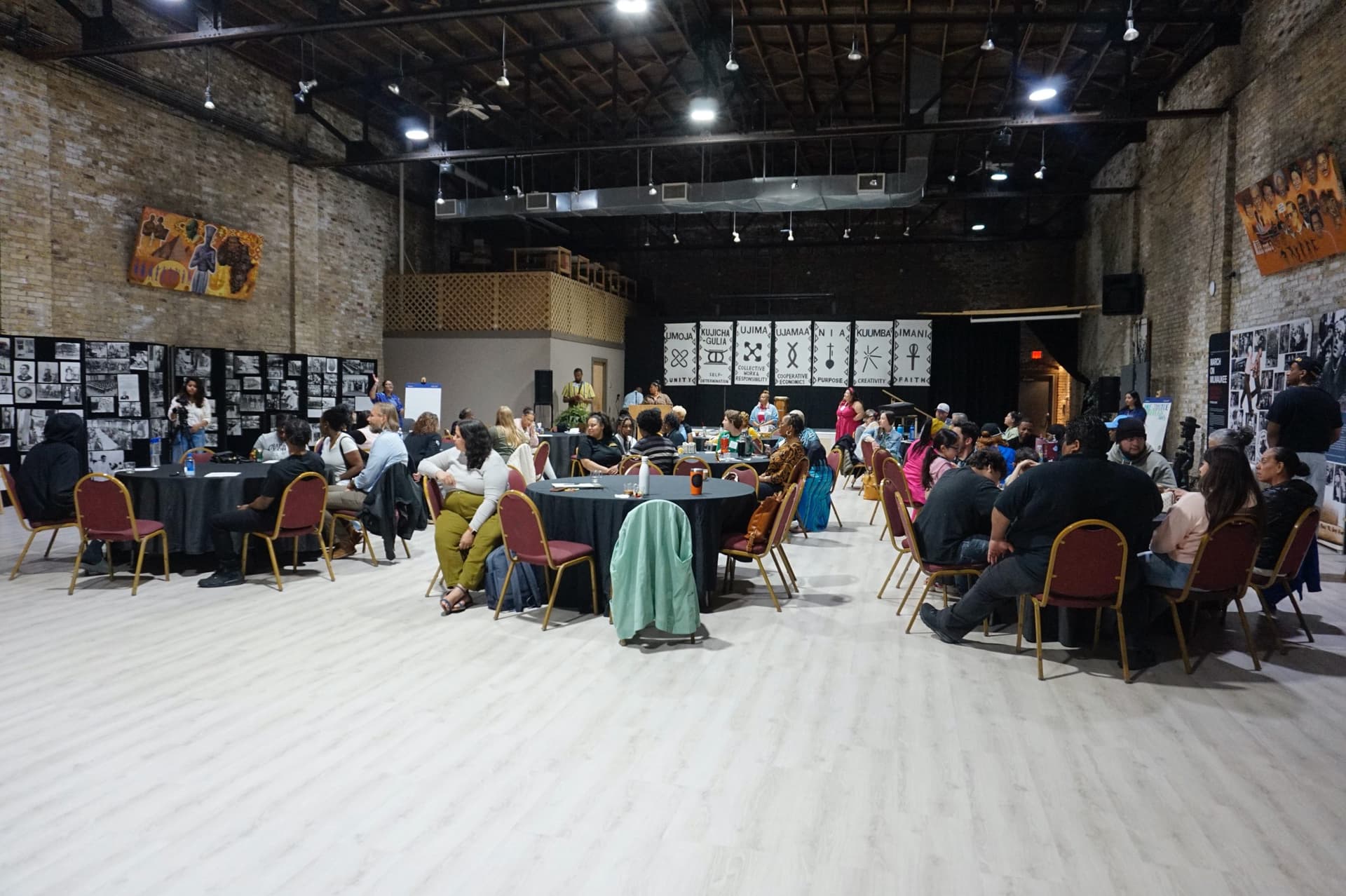
Flemister is one of the residents directly impacted by flooding who attended the Milwaukee Justice Strategy Blitz on May 27 and 28 at the Wisconsin Black Historical Society/Museum, 2620 W. Center St.
Residents, members of community organizations and other decision-makers convened to share stories, identify problems, develop priorities and support long-term community participation in flooding resilience and accountability efforts.
The event was a collaboration among various groups and funded through the The Water Foundation. Representatives from Clean Wisconsin, BlueGreen Alliance, Climate Justice Alliance and TRUE Skool served on the planning committee.
“The Milwaukee Justice Strategy Blitz is trying to create the case that change is not owned by any one person or organization,” said Shalina Ali, co-executive director of TRUE Skool and a member of the event’s planning committee.
In addition to discussion and planning sessions facilitated by UBUNTU Research & Evaluation, the blitz featured a community stories and culture night; free meals and gifts; raffles; and a reflection cruise aboard the Miss Wisconsin.
People directly impacted by flooding who attended both days and registered in advance received a $500 stipend.
‘A lot of red tape’

Residents from North and South Side neighborhoods opened up about their personal experiences recovering from flooding during heavy rainstorms in August and April, paying out of pocket for repairs and having to advocate for themselves to get access to resources.
“We want to take those stories and use that to mobilize flood victims that participated and flood victims across the city to be able to advocate for policy change,” said Richard Diaz, water infrastructure field manager with BlueGreen Alliance and a member of the planning committee.
Some residents reported having to stay in homes that are not considered safe because of their preexisting health conditions or exposure to mold and bacteria, while others said they have spent months living outside their homes while repairs are worked on.
Flemister received assistance from FEMA and her insurance after the August flood, but it wasn’t enough to cover the costly repairs to her home and car.
She said she’s tried to apply for loan programs that have income requirements and submitted her 2023 and 2024 income tax returns, but now they are asking for her 2025 returns.
“There’s just a lot of red tape that’s keeping me out of my home,” Flemister said.
Regina Harmon, who lives in Glendale near the Milwaukee border by Lincoln Park, said she heard a loud boom when a sinkhole opened below one of her home’s walls and collapsed it as her basement flooded overnight during the August storms.
“It felt like I was in a car wash, and I mean it shook the house like it was an earthquake,” Harmon said.
As she continues to recover from the traumatic experience, Harmon said she is interested in learning more about addressing repeated flooding and sewer backups on a structural level and improving emergency responsiveness.
“Maybe I can get information to reach out to people in the community and share information and see what we can do,” said Harmon, who added that she was not satisfied with the responses she got from some agencies when seeking help.
In the storm’s aftermath, she connected neighbors with retired contractors and handymen who could help out, and called county and other officials and relief organizations on behalf of her neighborhood.
Next steps

Jene Tate works on illustrating notes during day two of the Milwaukee Justice Strategy Blitz at the Wisconsin Black Historical Society, 2620 W. Center St. (Photo by Meredith Melland)