



Milwaukee Neighborhood News Service invites community members to submit opinion pieces of 500-800 words on topics of interest to central city Milwaukee. To send a submission for consideration, please email info@milwaukeenns.org. The views expressed are solely those of the authors.
April is officially Second Chance Month, a nationwide effort to raise awareness about stigmas surrounding people with criminal records and the barriers they face after incarceration.

But “second chance” has never been the right phrase because so many never had a real first chance to begin with. And a large number of very successful people fell down numerous times before they found their way.
That is why a growing number of advocates and organizations refer to April as “Fair Chance Month” instead.
What is accountability and what is not?
Stigma is one of the biggest barriers to any fair chance, but it also profoundly shapes public safety. And if we are serious about public safety, we have to be clear about what accountability is and what it is not.
Accountability matters. Acknowledging and preventing harm, especially violence, matters deeply. But accountability does not mean stigma. In many ways it requires the opposite.
Accountability looks different depending on the situation and those harmed, but stigma almost always produces something shallow: performative accountability and less safety.
Rebuilding a life requires agency, both internal and external. Internal agency is responsibility and growth. External agency is the road itself: housing, employment, reintegration. We cannot expect someone to drive well on a road structured to fail them. Those road conditions are shaped by the narrative society promotes about people with criminal records.
In several countries I’ve visited, criminal records are not permanently searchable by the public. Accountability is treated as resolution, not lifelong exposure — a design that increases reintegration and stability.
The lasting stigma of involvement in the justice system
The United States has chosen a different design. We extend the weight of accountability through permanent digital records, background checks, public shaming and the fixation on convictions in the name of transparency long after a sentence is served. This comes as much from “allies” on this issue as it does from people invested in the ineffective status quo.
In one recent example, Michelle Bryant of the well-respected WNOV radio, publicly criticized me several times on her show and others for not leading my bio with the details of my conviction. She also criticized Milwaukee Public Schools for profiling me positively years ago as an alumnus without foregrounding it.
In her view, that should remain the primary entry point into who I am, while everything I do for public safety and community should remain secondary.
This dynamic is not unique to me. It is a deeply counterproductive expectation that many formerly incarcerated people and people with records come to anticipate from society.
I am fortunate to have developed a strong internal narrative. When comments like that are made, I do not collapse or react. I observe and lean in. Still, I am just one person in Milwaukee navigating serious issues every day. What matters more is what this narrative architecture produces.
The power of narratives: Both good and bad
If we insist that someone’s worst decision decades ago must always be the headline of their identity, we reinforce that identity. When we rigidly fix people in a single story, we increase the likelihood that they conform to the role assigned to them.
Fixed narratives produce fixed expectations. Expectations shape opportunity. Opportunity shapes behavior. Behavior shapes public safety.
If we permanently identify people by their worst moments, we engineer instability.
What I’m asking for
My ask during Fair Chance Month is simple and difficult.
Examine your narrative.
Ask yourself why you hold the fears you hold about people with criminal records. Are those fears actually protecting you? Or are they keeping you from meeting some of the most developed and valuable people in your community? Are they aligned with the outcomes you want in society?
For those of us who stand up for marginalized communities, if we believe in nuance, structural analysis, and systemic context for some communities, we must apply that lens consistently. Selective nuance is not justice. It is preference.
We know little to nothing about the backgrounds or current lives of most people we engage with every day. We would never ask someone the worst thing they have done and interrogate them about it. Yet, once a record is revealed, we often feel a social license to interrogate, as if a past conviction grants us permanent ownership of a person’s private history.
People should be able to know whether or not someone is safe to be around. But using a conviction as the measure of that is not only ineffective, it can blind us to some of the most stable, caring and committed people in our communities.
That impulse is unproductive curiosity dressed up as accountability and public safety. If we are serious about safer, healthier communities, then we should care not only about what people have done but about what helps them become who they are still capable of being.
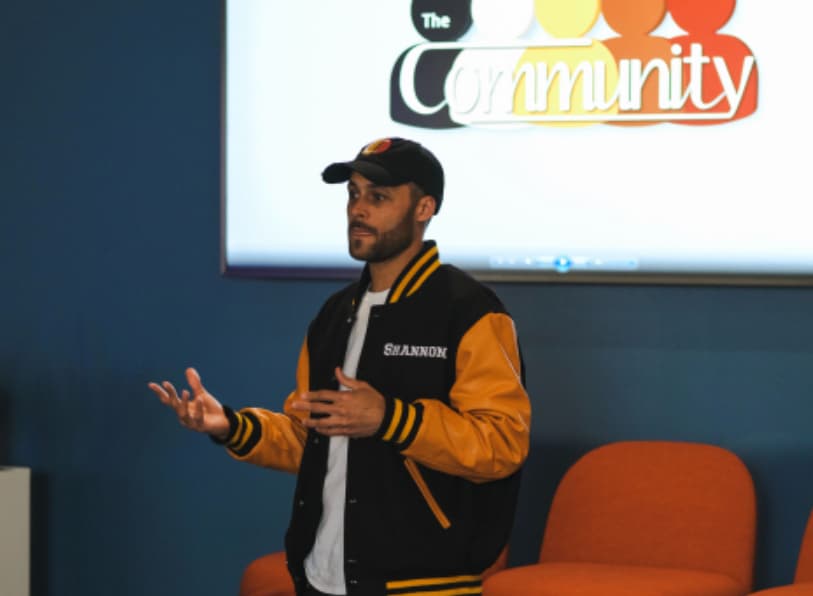
Shannon Ross is founder/CEO of The Community and a consultant with the McNeely Prison Education Consortium under Marquette University’s CURTO Center. Ross is also co-founder of the multidimensional justice solutions firm Paradigm Shyft, board chair of the youth/family services collective The Beginning and a founding member of Justice Forward Wisconsin, a statewide coalition focused on creating a justice system more worthy of that name.


