





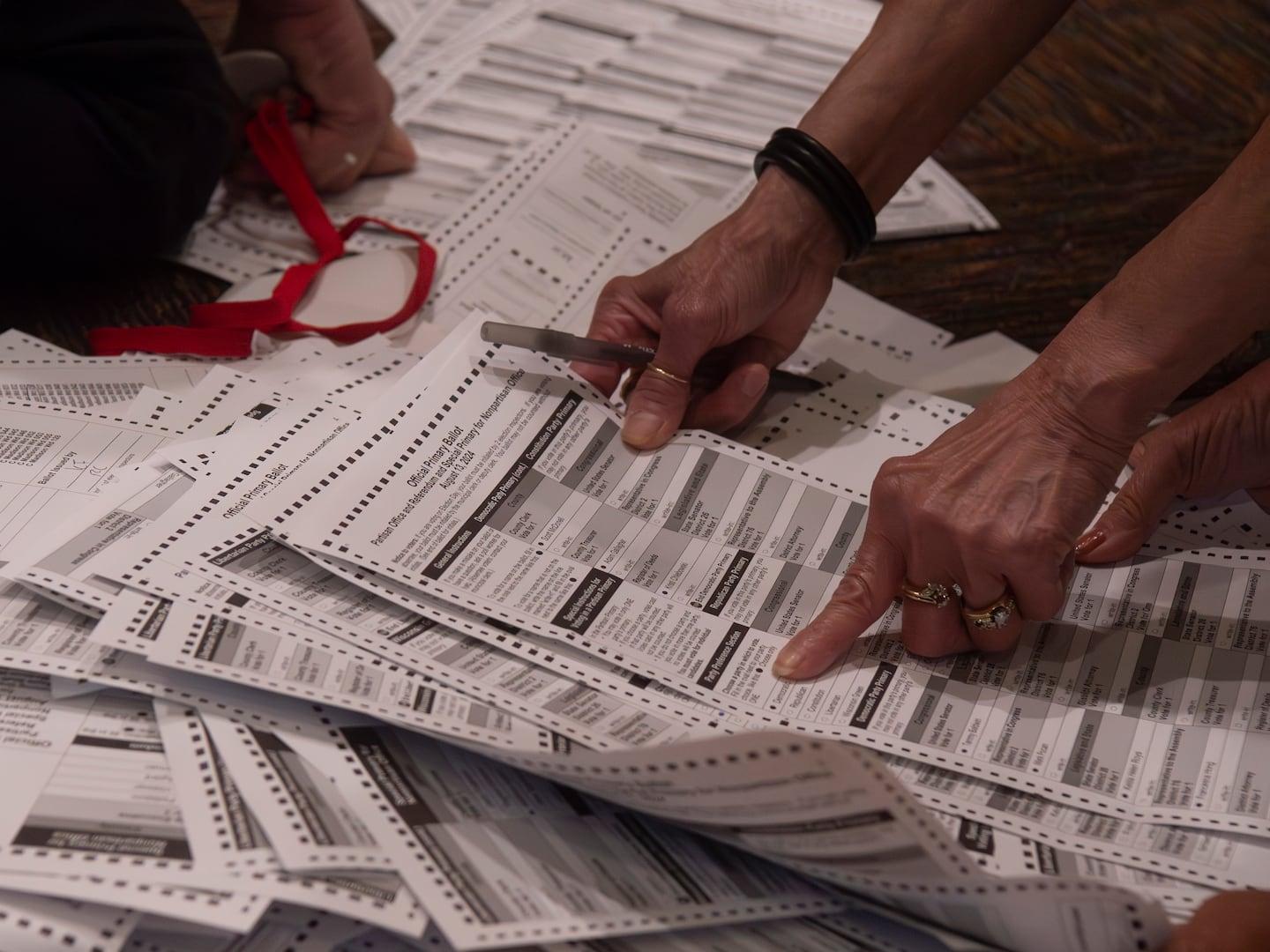


When this legislative session began, Wisconsin Senate leaders made the unusual decision not to create a committee dedicated to election policy for the first time in nearly two decades. That choice has had a measurable consequence: The Senate has taken up far fewer election bills than the Assembly, and several measures that cleared the lower chamber are now stalled with no clear path forward.
Of the 19 election bills that Votebeat has tracked this legislative session, 18 have gotten at least a public committee hearing in the Assembly, compared with nine in the Senate. Fourteen of those bills passed the Assembly, compared with six in the Senate.
Even in a session when the Senate has generally moved more slowly than the Assembly on many issues — as of Feb. 25, the Assembly has passed 439 bills since the start of the current two-year session, while the Senate has passed 276 — the disparity is especially stark on elections.
Both chambers’ election activity is down compared to last session. With a dedicated election committee in the Senate, about 30 election bills received a committee hearing, compared with about 45 in the Assembly. Republicans have controlled both chambers for more than a decade.
“The lack of the dedicated committee has definitely changed things,” said Sen. Mark Spreitzer, a Democratic member of the local government and government operations committees. Without a clear Republican point person on election policy in the Senate, he said, the chamber is allowing the Assembly to drive most of the legislative action.
Some of the bills that have moved through the Assembly but haven’t passed the Senate include proposals to expand early voting hours and to bring the state in line with a 2022 federal law regarding the timing of casting electoral votes and certifying election results in presidential elections, designed to prevent the kind of post-election chaos that President Donald Trump and his allies sowed after the 2020 election.
Two other bills — one that would require ballots to include plain-language explanations of proposed constitutional amendments and another requiring early in-person voting hours in every municipality — have gotten a public hearing in the Senate but have since stalled.
Clerks have told Votebeat that some of the stalled bills would significantly improve their efficiency — including an omnibus proposal to create a system tracking voters adjudicated incompetent and also send voters text notifications on the status of their absentee ballots, said Rock County Clerk Lisa Tollefson, a Democrat. That proposal passed through the Assembly in November, but hasn’t been heard in the Senate.
Given the absence of a dedicated Senate election committee, Tollefson added, the Assembly has been doing the heavy lifting. But even with ready-made bills, the Senate does not appear to be eager to pass election legislation.
In every legislative session since 2009, there has been a Senate committee formally tasked with covering election legislation. Committee chairs typically serve as the go-to experts on their panels’ subject areas. They consult with lobbying groups, schedule public hearings and set up committee votes — giving them the power to advance or stall legislation.
But when election bills are scattered across multiple committees, there’s no clear point person in the Senate to guide them through the process.
In the absence of a dedicated elections committee in this session, several committee leaders declined to explain whether or when the stalled election bills might move. And some voting groups say it has made it harder to know who to consult with in the chamber to discuss election legislation.
At a WisPolitics event in Madison on Feb. 12, Senate Majority Leader Devin LeMahieu said that the absence of a Senate committee “doesn’t make it hard to pass election bills.” He added that there are “definitely avenues where election bills can run in the Senate,” including the Senate Committee on Government Operations, Labor and Economic Development and the Senate Committee on Transportation and Local Government.
LeMahieu, a Republican, didn’t respond to Votebeat’s request for comment. Sen. Dan Feyen, the chair of the government operations committee, didn’t respond to multiple requests for comment. Sen. Cory Tomczyk also, who chairs the local government committee, didn’t respond to a request for comment.
But even some of their fellow Republicans are seeing the effects. For example, Sen. Rachael Cabral-Guevara is the author of two of the bills languishing in the Senate, which would require and fund a certain number of early in-person voting hours in every municipality. Those reforms, she said, are “crucial to restoring confidence in our election process.”
She said in the Assembly, municipalities and clerks are working on a few details before the bills receive a final Senate vote, though both proposals passed the Assembly in November. The proposal to require the in-person hours got a Senate hearing in late January but has seen no activity since, while the bill to fund it hasn’t gotten a hearing at all.
There could still be a late flurry of committee activity. On Feb. 27, the Senate government operations committee approved the proposal to bring the state in line with new federal laws regulating presidential elections. But the next presidential race is 2 years away, and most of the bills that would affect all elections — not just presidential ones — remain stalled. Another bill to require the Wisconsin Elections Commission to hear complaints against itself was scheduled for a March 3 hearing.
With the legislative session entering its final stretch, though, the stalled bills face increasingly long odds. The last general floor session period of the biennium ends on March 19, and the Assembly is effectively finished for the session. That means the Senate only has a few weeks left to consider election bills that already cleared the lower chamber, and if the Senate modifies any of them, the Assembly is unlikely to return to approve the changes.
Alexander Shur is a reporter for Votebeat based in Wisconsin. Contact Alexander at [email protected].