





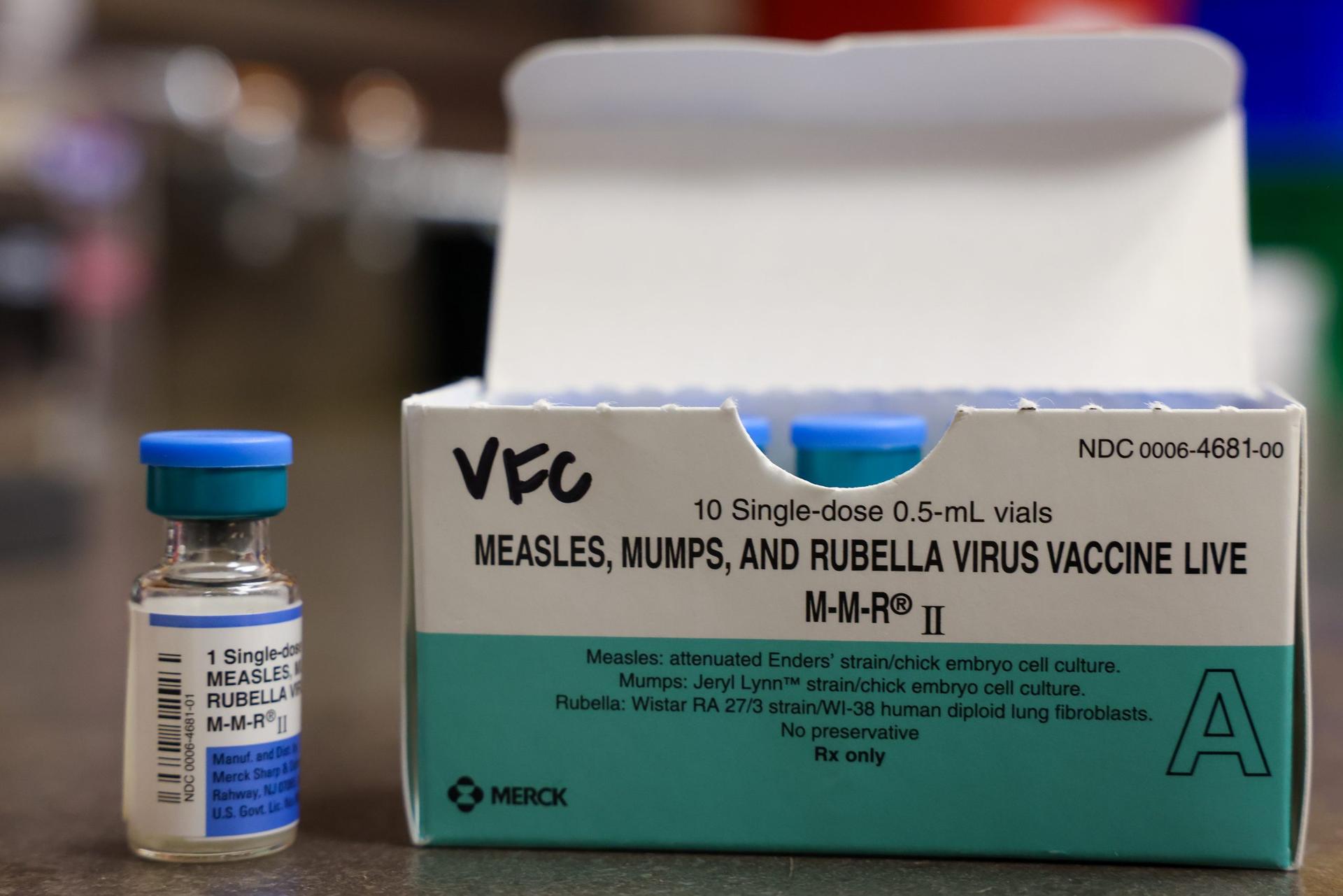
Source: Photo by Jonathan Aguilar / Milwaukee Neighborhood News Service / CatchLight Local
Measles is in Wisconsin. Are Milwaukee schools vulnerable?
Feb 11, 2026, 4:20 AM CT


Share
Originally published by Milwaukee Neighborhood News Service.
Three cases of measles has been confirmed in the state in recent weeks, the latest involving an out-of-state traveler who traveled through Milwaukee Mitchell International Airport to Walworth County on Jan. 29.
Milwaukee Health Commissioner Michael Totoraitis said during a news conference Tuesday that there were six individuals on the flight from the city of Milwaukee that may have been exposed as well as others.
“We have been in communication with those (six) individuals, and there’s also likely other contacts from the airplane that we do not have,” he said.
Measles is a serious disease that can cause high fevers, a spreading rash and lead to life threatening complications such as pneumonia.
Lindsey Page, director of immunizations and communicable disease with the Milwaukee Health Department, said measles is highly contagious and the risk of it hitting the city is real.
Extremely contagious but can be prevented
According to the Wisconsin Department of Health Services, measles can spread from person to person through the air from coughs or sneezes. The department states that measles is so contagious that 90% of unvaccinated people who are around someone who is infected may also be infected.
Page said the measles, mumps, and rubella, or MMR, vaccine is highly effective at preventing the spread of measles. Still, vaccine rates in the city are below the recommended rate for herd immunity. Herd immunity for measles is reached when 95% of people in the community have the MMR vaccine.
“It certainly poses a threat, which is why we’re obviously emphasizing the vaccination, which is key in preventing disease from spreading before it starts,” Page said. “The measles vaccine is one of the most effective and well-studied vaccines ever used.”
Three-fourths of 6-year-olds in Milwaukee have received both recommended MMR doses, according to the Milwaukee Health Department. Among 18-year-olds in Milwaukee, that number increases to 88%.
The Milwaukee Health Department and Milwaukee Public Schools are working to get residents access to vaccinations to increase those rates and keep them safe.
According to the International Vaccine Access Center, childhood vaccination rates in the U.S. have declined and only 10 states had MMR rates above 95% during the 2024-25 school year.
Vaccination rates low in many Milwaukee schools
Of the 152 Milwaukee public, private and charter schools with available vaccine data, only 11% have reached herd immunity levels of 95% for the MMR vaccine, according to data from the Washington Post.
Only two Milwaukee Public Schools for which data was available, Highland Community School and Cooper Elementary School, had an MMR vaccination rate of 95%.
Just 7% of Milwaukee schools have a 95% immunization rate for all required vaccinations.
Milwaukee Public Schools notifies families if immunization records are missing or incomplete, and students may be excluded from school if requirements are not met within a reasonable time, said Stephen Davis, MPS media relations manager.
Students are allowed to attend school while families work to get their required vaccinations or submit a valid exemption as allowed by state law, Davis said.
Wisconsin DHS allows vaccination exemptions for medical, religious or personal conviction reasons. Davis said exemption requests in the district have fluctuated from year to year.
Page said the Milwaukee Health Department runs vaccine clinics inside select MPS schools at the beginning of the school year. Students take home vaccine consent forms for parents to sign so those students can get their required immunizations in school.
In the near future, the department will set up targeted clinics in schools with low MMR vaccination rates, Page said.
MPS prepares for potential measles cases
MPS is monitoring measles in the region and maintains regular communication with local and state public health partners, Davis said.
Davis said the district has an infectious disease response plan, which the district reviews periodically and updates as public health guidance changes. The district last reviewed the plan in 2025.
“While no increased risk has been identified within our schools at this time, we are remaining vigilant and prepared to respond if conditions change,” Davis said.
If a case of measles is identified in the city, Davis said MPS would implement its response plan, including coordinating with key staff and reinforcing illness reporting procedures.
“Schools would follow established exclusion, cleaning and notification procedures in accordance with public health guidance,” Davis said.
Where can I get vaccinations?
The Milwaukee Health Department and Wisconsin Department of Health Services offer several resources to check your vaccination status and access free vaccinations.
Page said you can check your vaccination status with your pediatrician or doctor, look up your status on the Wisconsin Immunization Registry or contact the city Health Department at 414-286-6800.
Page said the Health Department offers free MMR vaccines to all residents at three immunization clinics regardless of age or insurance status.
These clinics also offer other vaccines, available for free for people without health insurance. Eligibility for certain vaccines depends on factors like age, and some vaccines are not always available.
Check vaccine availability by calling 414-286-8034.
Immunization clinic services
Keenan Health Center, 3200 N. 36th St.
Open for vaccines on Thursdays from 1 to 4 p.m.
Northwest Health Center, 7630 W. Mill Road
Open for vaccines on Wednesdays from 3 to 6 p.m.
Southside Health Center, 1639 S. 23rd St.
Open for vaccines on Mondays from 3 to 6 p.m. and Tuesdays from 1 to 4 p.m.
Alex Klaus is the education solutions reporter for the Milwaukee Neighborhood News Service and a corps member of Report for America, a national service program that places journalists in local newsrooms to report on under-covered issues and communities. Report for America plays no role in editorial decisions in the NNS newsroom.
Jonathan Aguilar is a visual journalist at Milwaukee Neighborhood News Service who is supported through a partnership between CatchLight Local and Report for America.

Alex Klaus is the education solutions reporter for the Milwaukee Neighborhood News Service and a corps member of Report for America, a national service program that places journalists in local newsrooms to report on under-covered issues and communities. Report for America plays no role in editorial decisions in the NNS newsroom.
Want More Local News?

Civic Media
Civic Media Inc.
The Civic Media App
Put us in your pocket.