
What if Big Ag Didn’t Control Our Food? – Barn Raiser

Feb 9, 2026, 9:12 AM CST


Share
This story was originally published by Barn Raiser, your independent source for rural and small town news.
In March 2025, the Trump administration abruptly froze more than $1 billion in funds for local food purchasing programs, dealing a major blow to the schools, food banks and tribal communities who relied on federal money to purchase fresh food from local farms.
The frozen funds also highlighted the precarious position of small farmers. Not only did small farmers lose these local markets, but they were also out of the money they used to buy their own seeds and put crops in the ground. Programs like Local Food for Schools Cooperative Agreement Program (LFS) and the Food Purchase Assistance Cooperative Agreement Program (LFPA) were innovative Covid-era federal programs that built direct markets between local farmers and institutions—unlike the big-ticket federal programs like crop insurance and other subsidy programs that benefit the largest, corporate producers in the country.
For antitrust expert Austin Frerick, local programs like LFS and LFPA continue to offer a path forward. In Frerick’s view, the stranglehold that corporate monopolies have on our food system require systemic changes and radical solutions informed by bold, imaginative experimentation. Having previously worked at the Open Markets Institute, the U.S. Department of Treasury, and the Congressional Research Service, Frerick points to the fact that such experimentation also requires bold leadership.
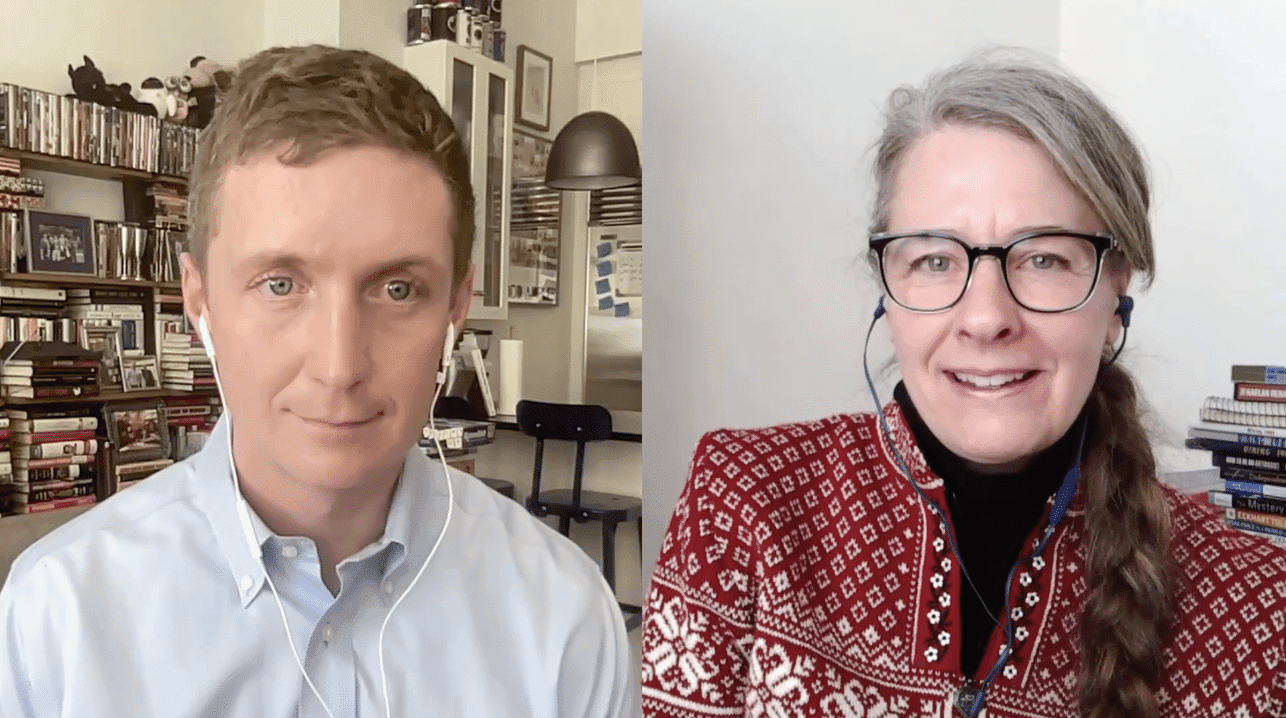
In this second of a two-part interview with Barn Raiser, Frerick, the author of Barons: Money, Power, and the Corruption of America’s Food Industry, explores the possibilities for such radical food solutions, from major reforms in the farm bill to how systemic changes can start locally through individual action. (You can read part 1, here.)
How do you get two sides to focus on a plan or various plans that accommodate multiple growers and producers? In my experience, you’ve got the farmers who grow 3,000 acres of corn and beans. They don’t take seriously the small farmers or organic farming. And so you’ve got people in different wheelhouses of production whose interests are not always aligned.
But I also know people who are big conventional farmers, who’ve got chemical inputs, that kind of thing. When I talk to folks like that, they actually do want to transition to more sustainable models of farming, more organic methods. But those transitions entail a lot of risk and expense. So what kind of programs are there for conventional farmers that want to make the change?
In Italian, there’s this phrase called “politics of the artichoke,” based on the idea that you eat an artichoke one leaf at a time.
You need to unify everyone and show people that change is possible. You start with reform of the meatpacking industry, and you go trust-bust the meat industry. Because that unifies different types of farmers, and all the workers and the vegans agree with it, too.
Our farm bill right now picks favorites. You grow corn, you get a ton of subsidies; you grow carrots, you get nothing. That is what crop insurance is designed to do; that is what the ethanol mandate is about.
I’m from Cedar Rapids, Iowa. Quaker Oats has a big factory there. Iowa used to have a ton of oat production. But today, most of the oats for Quaker Oats are coming from Canada. Why are we not growing oats right now in Iowa, especially with the soybean glut that we’re facing?
The reason is because our farm bill doesn’t give a ton of subsidies to oats. So we need to change the farm bill. My dream is to move the farm bill away from subsidizing certain crops and make it subsidize certain farm practices. For instance, if you do cover crops, buffer strips, pasture, whatever—let farmers decide what’s best for their land. We have to stop picking favorites. I don’t like supply management. I don’t like the government picking optimal production.
For instance, who would have thought there would be the massive protein boom right now? Take cottage cheese. Young men are obsessed with cottage cheese right now. Who would have thought? I mean, I love cottage cheese. Growing up, I thought cottage cheese was an old lady food.
Anderson Erickson cottage cheese in Iowa is amazing. They even have mixes, like “garden vegetable.” It’s really good.
Sara, just indulged me for a second. Anytime I travel in America, I love going to a grocery store. I walk down every aisle. I look at all their things. Do you know how many sour cream dip options there are in Iowa? AE [Anderson Erickson] has like 10 different kinds of sour cream dip, and every Iowa fridge always has one of those. It is crack. It is so good.
I say all this because I want to move to a farm bill that does this. Because what makes sense in Montana is going to be different in Florida. We have to allow that to happen. Your conventional farmers are in a hard spot right now. They see the writing on the wall, but they have to keep doing this model to survive.
What I’ve realized is the farm bill doesn’t even care about them. For every dollar Americans spend at the store, farmers in America get $0.14, the least amount ever recorded in American history. Once you know this, you realize the farm bill is designed for Cargill, for Pepsi, it’s not designed for farmers.
To me the single best thing you can do to make food more affordable in America right now is do away with the ethanol mandate. It’s been more than 20 some years. Ethanol should compete on its own. It should not have a government mandate.
The U.S. Department of Agriculture’s (USDA) response to farmers being shut out of export markets because of the Trump administration’s new tariffs is the Farm Bridge Assistance Program. It is spending $12 billion to provide one-time economic relief to crop farmers. Is that going to work?
There’s no plan here. All they’re doing—and this is what Republican and Democratic administrations have done constantly—is throw money at the problem.
These are structural issues. That’s why the farm bill has become incredibly expensive. It’s only going to get more expensive until we make these structural adjustments. Increasing the ethanol blend as Secretary of Agriculture Brooke Rollins is advocating, with her support of the nationwide year-round sale of E-15, is not fixing these underlying issues.
I feel confident in saying that Brooke Rollins is the worst USDA secretary we’ve had in my lifetime. To be fair, there has been no good one in either political party, but she’s the worst mix of incompetency and lack of vision.
It’s really scary because we’re at such a pivotal moment in all these different ways.
This stuff is really complicated. Crop insurance is really complicated. Even the dairy program. My favorite joke in the dairy world is” “Only five people understand the dairy program and four of them are dead.”
If Republicans lose the House, the Senate this year, and the presidency in 2028 it will be partly because of her. Food prices matter. And she’s doing nothing to get at these core issues.
Let’s talk about rural innovation. What are you looking at when you’re out in the field? What models can you imagine you could see scaling someday?
I think about Ellen. She is a farmer and a mother in western Iowa who also opened a restaurant where she serves her own meat.
The big problem she had was the big distributors don’t want to deal with local mom and pop farmers. So she created her own nonprofit food distribution company. What a cool thing. She helped farmers in the area put together infrastructure to help feed local kids. Sadly, part of the DOGE [Department of Government Efficiency] cuts, really hammered that program. But I want to grow those programs. That could even be something university extensions could play a role in.
Another idea is public procurement, where we can incentivize institutional buyers like schools and colleges to purchase food from local farms. Speaking of bipartisan measures, I’m working with some Republicans in Texas on this. They love this idea because first of all, the state doesn’t have to pay for it. They’re shifting the burden onto these colleges who don’t pay taxes.
I went to a small university in Iowa, Grinnell College, which had a big endowment because Warren Buffett was a trustee for a long time. And one of the most famous produce farms in Iowa was literally across the street from the college.
And guess what? Our college dining hall wasn’t feeding us their produce. We were getting industrial produce from like Mexico. That produce farm by the college went broke, and that scared a lot of other young farmers in Iowa.
That’s to highlight solutions that are something you can do locally. You can work with your school or college, and you can also have fun with this.
My current obsession right now is Irish butter. Ireland doesn’t do industrial cows. They do cows on grass. You can have a family with a few kids and 100 cows and make a decent living in Ireland. You cannot do that in America. You have to do this industrial model that relies on undocumented labor.
The other big thing is rampant food fraud. I think we should create a different agency not only to create better standards, but also to enforce them. The United Kingdom has a version of this
I personally don’t put much weight to the USDA’s organic label anymore because there’s so much fraud. When I’m at Trader Joe’s if I see an organic product is from Turkey, I don’t trust that label because I know Turkey is known for rampant organic fraud.
I said this in a talk I gave in Iowa last year, and I had an organic farmer kind of rip me a new one. She was like: You’re right, but most people don’t know what you know. The premium I get right now from the organic label is how I live. So part of the problem here is we need to make these labels mean something again.
But when I go shopping, I’m not thinking about how to decipher the labeling standards on the box.
You shouldn’t have to. That is the failure of government not doing its job. We’ve shifted that burden to eaters like you. And guess what, most of us work nine to five. We’re busy, we don’t have time to know if labels mean something.
Trader Joe’s has tons of organic imported juice. Why are we shipping liquid across the world? That makes no sense. You can do apples in like 48 out of 50 states. We shouldn’t be importing our apple juice, but we are.
How can eaters get closer to the farmer and put our dollars into the farmer’s pockets instead of into these monopolies?
There’s two questions I hear when I give talks. One is the question, what should I buy? I’m always hesitant to answer. I can tell you which brands are kind of B.S., but here’s the thing, they change. What makes sense one day is not the same the next day.
That said, what we really need to think about now is structural change. If there’s a certain vendor at the farmers’ market you like, the best thing you can do is actually advocate for them so institutions like colleges and schools can help stabilize their business and help them grow. You can say, “Hey college, you should really buy from this person.” You can buy a bag of carrots from them each week, or guess what—they could also be selling a ton of carrots locally.
The other thing you can do is spread the word about cool programs happening near you. For example, I was speaking in the Wisconsin Dells two years ago in front of the Wisconsin Farmers Union. A friend of mine was telling me about how here’s a lot of cool indigenous food programs going on in northern Wisconsin. A lot of it is being driven by the casinos.
She was telling me how historically, the USDA dumped surplus cheese on these tribes along with apple sauce that contained no apples. But what they’re doing now is they’re creating programs where they’re buying from indigenous farmers and giving that food to indigenous people in need.
But they didn’t build the program overnight. She was showing me how first one year they did this many and then the next year they did more, and how they went about slowly growing it.
I say all this because that’s not what the social media rewards right now. Social media rewards crazy, extreme takes. Average Americans being good to each other, doing good things doesn’t go viral right now. But guess what? That’s where most people are. And people want to hear that.
I love that the goodness and the positive things happening on the ground in rural and small town places, that’s actually radical now.
People are shutting down right. And that’s what the powers that be want. That’s what the oligarchs want. They want you to give up. More than anything, moments like this demand that you don’t.
Is there anything that I didn’t cover that you really want to hit home for Barn Raiser readers?
Journalists are your best friends. If you see something, say something. I mean, for me personally, my best information came from people sending emails telling me, “Hey, you should look over here,” or, “Hey, you should really talk to this person,” or “Hey, my friend over here is doing something really cool.”
Anyone who knows of a cool program, please email me. I would love to hear it.
Also, being a member of a democratic society requires you to at least pay for one news subscription. That’s the hill I’m ready to die on. It really bothers me that a lot of people don’t pay for news anymore.
I used to be a paper boy. And like half the households in my neighborhood paid to get their news. And now we live in a day and age where people are not paying for news. And if you’re not paying for news, you’re just eating slop online.
Know what’s going on in your community so you don’t feel lonely, because that’s what these platforms do is they want to get you angry and they want to get you lonely, so you don’t leave them. Whereas part of the newspaper’s job is to create community and by supporting them you’re encouraging that behavior.
When we talk about the New Deal, we love the New Deal policies, but we also overlook the consequences that harmed people. Some New Deal agriculture policies disproportionately hurt African-American farmers. Black farmers had more losses and had to give up more land during the New Deal. How do we create policy where there’s equality and access for Black farmers, Asian farmers and small organic farmers?
The Land Report just came out with a Top 100 ranking of who owns the most land in America. The Walmart family now owns more land in America than all the farmland owned by black farmers combined. And that, to me, says so much about this moment. There’s never one thing that fixes everything. You have to do a constellation of things.
Republican Teddy Roosevelt didn’t just break up the meat industry with one thing. It was a constellation of things that broke up the meat industry.
Something simple would be the policy that you can’t get farm bill money if you’re a corporate investor. You have to work the land to get farm bill money. The other thing is having the right people in positions of power. The USDA has a lot of authority to rein in the meat packers. I got angry with Tom Vilsack for giving USDA contracts to the Batista family’s JBS corporation, which has pled guilty to bribery and has allegedly bribed meat inspectors and used child labor. Don’t give them subsidies. At some point there has to be consequences for bad actors, because if they’re not, they’re going to keep pushing the envelope.
For so many players in this space, I think they’re like a bunch of young kids that haven’t been punished. So they keep pushing the envelope. And until they’re actions have consequences, it’s only going to get worse. But this goes back to personnel.
You need to get actual reformers in positions of power and then things will change. We saw that in the Biden administration with Lina Khan. Lina Khan changed the Federal Trade Commission when she was the chair. People of both parties loved her because she actually was a public servant being a public servant.
The politics of what she does is so good. I really do think Tom Vilsack contributed to Vice President Harris’s loss in 2024 because of his failure to reign in the food monopolies. Lina Khan at the FTC had antitrust authority over most markets except meat packing, which falls under USDA.
Not only did Vilsack not do anything, consolidation got worse under his watch. So you had this brewing affordability crisis that he failed to solve.
People want a fighter right now. Lina was almost out there like a politician. She spoke at an Iowa Farmers Union event in Iowa denouncing consolidation in the fertilizer industry. And she had a hundred people in the room. No bureaucrat in Iowa shows up from D.C. and gets a hundred people in a room.
She’s a living historical figure. She’s really shifting antitrust, the academic discourse because of that. And she’s a good example too of like, you don’t change things overnight.
Breaking up meatpacking a century ago took decades. You’ll see corporate Democrats today in the pocket of Big Ag, they’ll try to fight Lina Khan, but her politics are just too good. And if you lean into the fight, you’ll have the public support that lets you overcome vested interests.
As with any reformer, there’s so much we can learn from the success of Lina Khan. The lesson we should really take from the antitrust movement is how they worked hard to get key people like Lina Khan in positions of power.
You got to go big. You can always compromise down, but we need to shoot for the moon right now.
Have thoughts or reactions to this or any other piece that you’d like to share? Send us a note with the Letter to the Editor form.

Sara June Jo-Sæbo grew up in Koochiching County, Minnesota, on the Canadian border and in rural Winneshiek County, Iowa. She now lives in Southwest Virginia where she is an author and freelance writer. Jo-Sæbo publishes her history work on her website: Midwest History Project.
Want More Local News?

Civic Media
Civic Media Inc.
The Civic Media App
Put us in your pocket.