

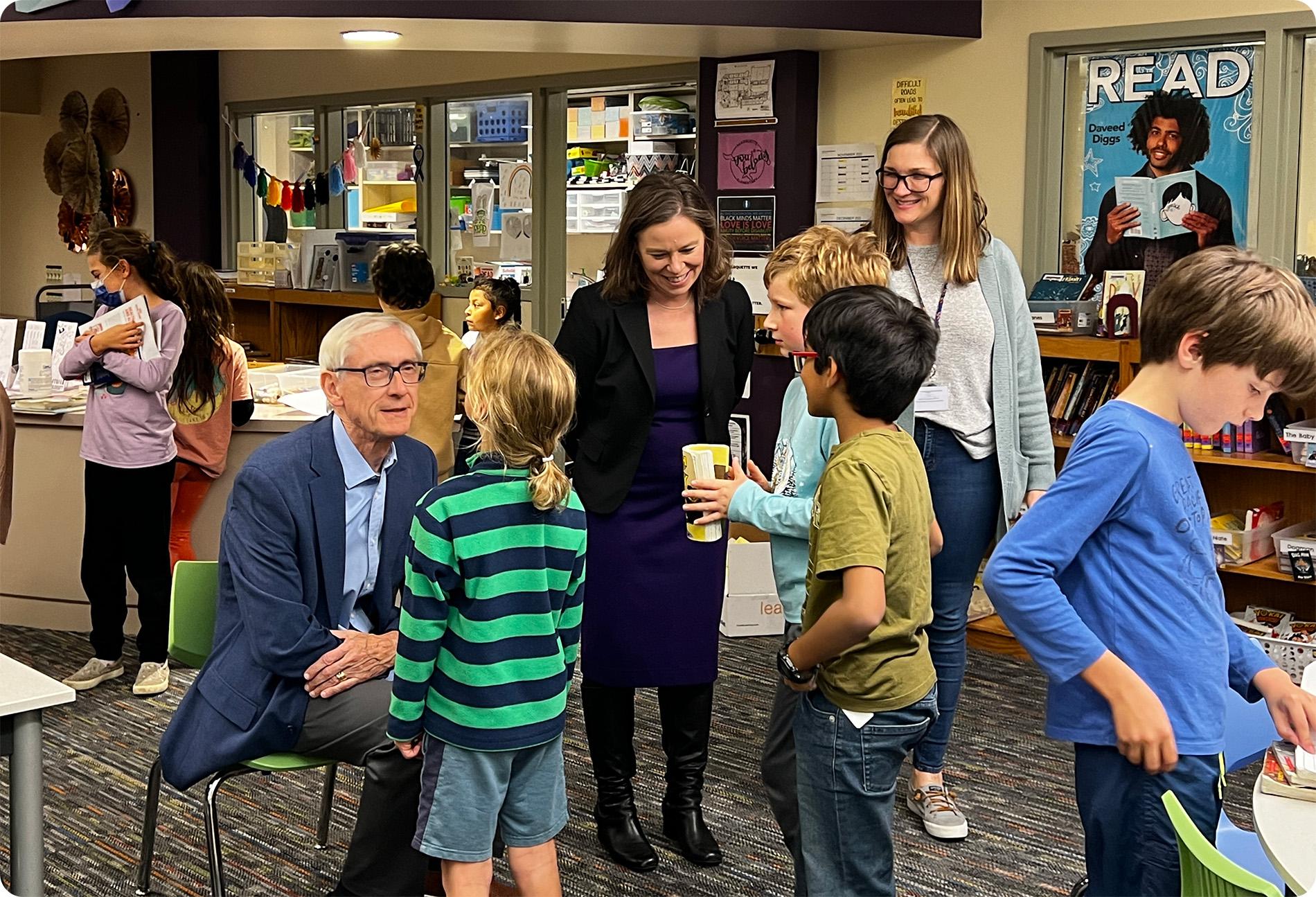
Source: Wisconsin.Gov
In conversation with Lt. Gov. Sara Rodriguez
Rodriguez has served alongside Gov. Tony Evers since his reelection in 2022.

Jan 21, 2026, 4:29 PM CST


Share
Sara Rodriguez entered the race for governor in July. She has served alongside Gov. Tony Evers since his reelection in 2022. Before taking office, Rodriguez served as a state legislator from 2021-2022.
Prior to her time in office, she worked as an emergency room nurse.
Rodriguez appeared on the WXCO Morning Show with Chad Holmes and Isabela Nieto on January 21. Here’s what she had to say.
This conversation has been edited for clarity and brevity.
How would you handle federal government actions that conflict with Wisconsin’s values, including threats to withhold funding or the presence of armed federal agents?
It’s a great question, and it’s not one we’ve had to grapple with before. I’ve put forward principles regarding federal agents operating in Wisconsin. Even though we don’t currently have a surge of federal agents, we should expect escalation and be proactive in keeping Wisconsinites safe.
Federal agents should be unmasked and clearly identifiable, should wear body cameras to ensure their actions are legal and appropriate, and should avoid sensitive spaces without a judicial warrant. Sensitive spaces include churches, schools, domestic violence shelters, courts, and hospitals. Agents should not be entering these spaces indiscriminately.
This is not something I would tolerate as governor. I’ve asked the legislature to act so we can proactively protect Wisconsinites.
As for withholding funding that has already been appropriated, federal courts have said that is illegal. States cannot be denied funds simply for political reasons. We would work closely with the attorney general to be ready if the administration attempted this in Wisconsin. The goal is to be proactive, not reactive, and to think several steps ahead to protect people in this state.
Why was your proposal regarding federal agents controversial?
I don’t really understand why it should be controversial. All I’m asking is that federal agents meet the same standards we expect of local law enforcement in Wisconsin. We’re not asking them to do anything differently.
I understand the concerns that have been raised, and I respect those perspectives, but I disagree. Being proactive rather than reactive is essential to protecting Wisconsinites.
How does your experience as lieutenant governor and your background in health care make you a unique candidate for governor?
I’m a nurse by background, and it’s been the honor of my life to serve as lieutenant governor. Running for office was never part of my original plan. I worked in health care from being an ER nurse on night shifts to serving as an executive in a large health care system.
I’ve also served in elected office, including two years in the State Assembly, where I flipped a district from red to blue. I’m the only candidate in this field with experience both as a private-sector executive and as an elected official.
That balance matters. Managing a state like Wisconsin requires executive experience, the ability to manage large budgets and organizations, and established relationships within the legislature. We have a real opportunity in 2026 to flip both chambers, and to take advantage of that, we need someone ready on day one.
What priorities would you focus on to move an agenda forward if the legislature changes hands?
I’ve traveled to all 72 counties every year I’ve been lieutenant governor. What I hear consistently is that people are working hard—often one or two jobs—and still feeling squeezed.
Lowering costs for families is critical. That includes accessible and affordable health care. I’ve proposed a public option on the insurance exchange to lower premiums, expanding Medicaid, and opening the state health insurance plan to school districts and municipalities to reduce costs.
Child care is another major priority. I want to cap child care expenses at 7% of income, including for upper-middle-class families, because this would have a real impact on household budgets.
Housing is also key. Starter homes in the $150,000–$175,000 range largely don’t exist anymore. The state needs to step in to help create those opportunities so young people can build equity and stay in Wisconsin. These efforts would strengthen our workforce, attract businesses, and improve the economy.
Why are rural hospitals closing, and what can be done to change this?
It’s deeply unfortunate. Federal cuts to Medicaid and Medicare disproportionately hurt rural hospital systems compared to urban and suburban ones. These decisions make an already difficult situation worse.
Providing rural stabilization dollars will be a priority to help hospitals stay open. If we want to revitalize rural communities and attract younger families, we need housing, child care, and nearby health care—including places where people can safely deliver babies.
Health care is actually the number-one employer in many rural areas. When a hospital closes, it creates a massive economic barrier for the entire community.
How would you address the shortage of doctors and health care providers in rural areas?
I chaired the Health Care Workforce Task Force and helped develop recommendations to encourage more people into the profession. We’re projected to be short about 20,000 nurses in the next five or six years, and we also face shortages of physicians, nurse practitioners, and physician assistants in rural areas.
We need incentives to encourage providers to work in underserved communities. That includes loan repayment assistance, help with down payments on homes, and other financial incentives to recruit and retain health care professionals where they are most needed.
What has surprised you most about what you’re hearing from voters across Wisconsin?
What stands out most is how much more unites us than divides us. Across urban, suburban, rural, and tribal communities, the concerns are often the same, even if the solutions may differ.
Housing and child care are consistently the top two priorities. People want strong public schools, parks, pools, and communities that invest in kids. That shared sense of priority has been very encouraging.
As governor, how would you begin addressing affordability concerns across different regions of the state?
My first budget would focus on expanding Medicaid, implementing a public option to lower insurance premiums, capping child care costs at 7% of income, and addressing property taxes.
Wisconsin is in the top ten nationally for property taxes, and the situation keeps getting worse. Local governments raise property taxes to fund basic services because the state hasn’t adequately adjusted how it funds cities and counties.
We’re also relying on local property taxes just to keep public schools operating—not for new buildings, but to pay teachers and keep the lights on. That funding system is broken.
By fully funding municipalities and public schools at the state level, we can lower property taxes statewide.
I’m also proposing a freeze on energy price increases until we develop a clear, strategic plan. Rising energy costs shouldn’t push people out of their communities, and large energy users shouldn’t shift those costs onto residents.
What would you do to protect and strengthen Wisconsin’s two-year colleges?
Two-year colleges are personal to me. They provide an affordable entry point to higher education and a seamless bridge to four-year universities.
We should support two-year colleges where they are regionally needed and better coordinate them with Wisconsin’s strong technical college system. What’s missing is a clear, statewide transfer pathway to four-year degrees.
Ensuring credits transfer easily would save families money and give students flexibility. It’s also a great option for students who aren’t sure what they want to do yet, allowing them to explore without taking on overwhelming debt.
These pathways help families, strengthen the workforce, and make higher education more accessible across Wisconsin.

Isabela Nieto is a reporter for Civic Media based in Wausau, where she reports for WXCO/Bull Falls Radio. She moved to central Wisconsin after stints reporting local and state news in Illinois. Reach her at [email protected].
Want More Local News?

Civic Media
Civic Media Inc.
The Civic Media App
Put us in your pocket.