

Source: Canva / Civic Media
How Historic Christmas Traditions Evolved from Medieval Times
A medieval historian explains why Christmas trees and yule logs owe more to ancient fears of darkness than modern holiday generosity and cheer.

Dec 22, 2025, 12:01 PM CT


Share
Christmas traditions may feel old, yet familiar. Much of it is often focused around the trees, lights, wreaths, music, and time with family. But many of the things we associate with the history of the holiday didn’t begin as Christian customs. Medieval Social Historian Dr. Jacqueline Murray joins Mark Becker, host of Rational Revolution, for an interesting discussion about Christmas and how the layered celebration is shaped by centuries of fear, survival, and cultural adaptation.
“Christmas wasn’t the most important religious holiday in the Middle Ages,” Murray explains. “Easter mattered more. Christmas developed largely as a social response to the darkest time of the year.”
Watch the entire discussion here:
Murray describes winter as a frightening time before the invention of electricity. As the days shortened and darkness grew, people across Europe marked the winter solstice with rituals meant to protect their homes and encourage the sun’s return. Evergreen branches symbolized endurance. Holly wreaths were believed to ward off evil spirits, while mistletoe represented fertility and protection.
And even the date — December 25 — reflects a blending of traditions. Murray says early Christianity developed inside the Roman Empire and it absorbed existing celebrations, including Saturnalia, a festival honoring the sun god and the return of light.
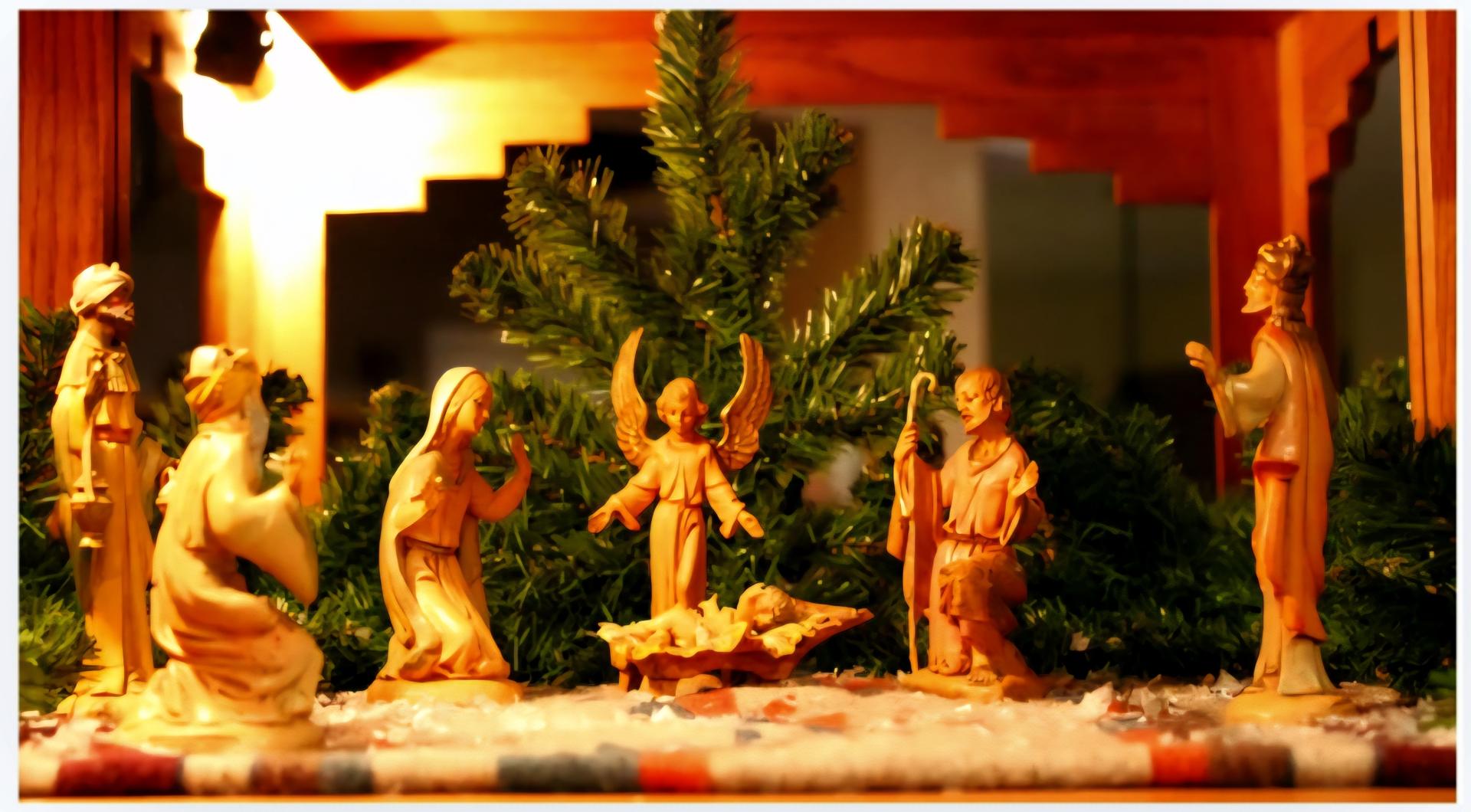
The Nativity scene, which is now central to Christmas imagery, didn’t appear until 1223, when St. Francis of Assisi created the first live manger scene to help ordinary people understand the story of Jesus’ birth. That moment helped shift Christmas into a more emotional and accessible celebration.
Many modern traditions followed centuries later. The first documented Christmas tree appeared in Germany in 1536. Candles were added to symbolize light returning to the world. By the 19th century, Queen Victoria and Prince Albert popularized the decorated tree, while writers like Charles Dickens helped define Christmas as a season of generosity, warmth, and care for others.
Murray says that lasting appeal goes beyond religion.
“You don’t have to be Christian to understand the message,” she says. “Christmas speaks to kindness, humility, and looking after people who have less.”
So, in that way, Christmas remains what it has always been — a human response to darkness, and a reminder to create light for one another.

Teri Barr is Civic Media’s Content Creator and a legend in Wisconsin broadcast journalism. Email her at [email protected].
Want More Local News?

Civic Media
Civic Media Inc.
The Civic Media App
Put us in your pocket.